


Solid plastics (e.g., microbeads, pellets) intentionally manufactured in small sizes for product use
(cosmetics, detergents, pharmaceuticals, agricultural and horticultural materials)
SITE MAP
Business
- Testing & Analysis
-
Textile & FashionLiving & Consumer ProductsBio & HealthEnvironmental SafetyMaterials & Components
- Quality Inspection
- Product Safety & Certification
- Research & Development
- Business Support
Sustainability Management
Announcements
Customer Support
- Service Guide
About KOTITI
- PR Center
- Location
Microplastics
KOTITI provides highly reliable microplastic analysis services.
As microplastic pollution has recently become a serious social issue, there is a growing need for safety assurance and quality control across various industries. KOTITI, equipped with a clean system to prevent external contamination and skilled professionals, participates in numerous national research projects, including: the development and international standardization of microplastic evaluation methods for the textile industry; the development of precise microplastic analysis techniques for environmental samples; and distribution surveys of domestic river systems. Based on accumulated analytical expertise and data, KOTITI provides accurate and reliable microplastic analysis services.
What are Microplastics?
- Defined as plastics intentionally manufactured or broken down into particles ≤5 mm.
- They are difficult to degrade naturally, can travel long distances, and accumulate through the food chain, causing widespread environmental pollution.
- Chemical components within microplastics and their degradation products have been reported to have direct and indirect effects.
-
Primary Microplastics
-
Secondary MicroplasticsPlastics unintentionally fragmented into small particles in the environment or during product use
(tire wear, synthetic fiber washing, urban dust)
- Microplastic Analysis Examples
-
Detection of microplastics in environmental samples
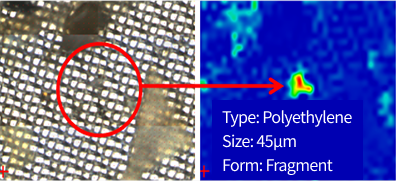
-
Detection of microplastics in textile wash water

Targets for Microplastic Analysis
- Drinking water, beverages (e.g., finished products, raw water)
- Consumer chemical products (e.g., fabric softeners, laundry detergents)
- Cosmetics (e.g., wet wipes, cleansing foam, shampoo)
- Food products (e.g., salt, honey, snacks)
- Textiles (e.g., fabrics, films, meat pads)
- Containers (e.g., baby bottles, PET bottles)
- Filters (e.g., water purifier filters, faucet filters)
- Environmental samples (e.g., treated water, wastewater, river water)
Testing Methods and Analytical Equipment
- Testing Methods
-
- Guidelines for the analysis of prohibited ingredients in cosmetics
- Regulations on testing/inspection standards and methods for consumer chemical products subject to safety verification
- In house method
- ISO 4484-1, ISO 4484-3
- Analysis Equipment
-
- µ-FTIR, µ-Raman, Py-GC/MS
Application Procedure
-
01
Application Processed

-
02
Issuance of Quotation and Tax Invoice
-
03
Testing and Analysis
-
04
Test Completion
-
05
Payment Confirmation
-
06
Issuance of Test Report
Email Address Lookup
팝업 닫기Here is the requested email address.

- Corporate NameKOTITI Testing & Research Institute
- Address(13840) 48, Gwacheon-daero 7na-gil, Gwacheon-si, Gyeonggi-do, Republic of Korea
- Tel+82-2-3451-7000FAX+82-2-3451-7170
- Copyright © KOTITI. All right reserved.
- Customer Support
- 02-3451-7000
- Business Hours: Workdays 09:00~18:00


